

Top 5 Crypto Airdrops of 2025
Crypto users received billions of dollars in so-called “free money” through token airdrops in 2025. While airdrops were a major tailwind for the market in 2024—distributing more than $19 billion at peak token prices—this year told a different story.
Despite Bitcoin and Ethereum reaching new all-time highs, 2025 saw fewer headline-making airdrops, and peak valuations were notably lower. Even so, the five largest airdrops of the year still delivered roughly $4.5 billion in tokens to users at peak prices.
Below is a look at the biggest airdrops that rewarded early adopters, community members, and active users throughout 2025.
Story Protocol
Story Protocol launched its layer-1 network and IP token (IP) in February, positioning itself as a challenger to traditional intellectual property systems dominated by rent-seeking intermediaries.
As part of its launch, the protocol airdropped around 10% of the total IP supply, or roughly 100 million tokens, to early users and community members. While those tokens were valued at about $171 million as of December 15, their value peaked at over $1.4 billion in September when IP reached an all-time high of $14.78.
Since then, the token has declined sharply, falling nearly 89% to around $1.71.
Berachain
Proof-of-liquidity layer-1 network Berachain distributed approximately 79 million BERA tokens to holders of its bear-themed NFTs and other ecosystem participants at launch in February.
At its peak, the airdrop was worth more than $1.17 billion, based on an all-time high price of $14.83 per token. However, the high was short-lived—BERA has fallen nearly 96% since launch and was trading at around $0.67 as of December 15.
Berachain previously raised $80 million in 2024 to support its development.
Animecoin (ANIME)
Animecoin, a token launched by the team behind the Ethereum-based Azuki NFT collection, debuted on Arbitrum in January.
Marketed as a culture-focused token aimed at aligning incentives across the global anime community, ANIME distributed 39.5% of its supply, or 3.95 billion tokens, to Azuki NFT holders and partner communities at launch.
At its peak, the airdropped tokens were valued at approximately $711 million, with ANIME reaching an all-time high of around $0.18, according to CoinGecko. By December 15, the token had fallen to roughly $0.006, representing a decline of about 97%.
The airdrop briefly boosted Azuki NFT prices, pushing the floor price above $41,000 in mid-January, before collapsing nearly 95% to around $2,100 by December.
Jupiter
Solana-based DEX aggregator Jupiter held another “Jupuary” airdrop in January, distributing 700 million JUP tokens across three user groups.
At the post-airdrop peak on January 27, the tokens were worth roughly $791 million, with JUP trading around $1.13. This marked a sharp contrast to Jupiter’s 2024 airdrop, which distributed 1 billion JUP tokens valued at up to $2 billion at peak prices.
Although the Jupiter DAO has approved an additional 700 million JUP tokens for distribution in January 2026, their value had fallen to approximately $133 million as of December 15, with JUP trading nearly 90% below its all-time high.
Linea
Ethereum layer-2 network Linea allocated 10% of its LINEA token supply, or about 7.2 billion tokens, to early contributors. An additional 2.1 billion tokens were distributed through its airdrop, bringing the total to 9.36 billion tokens across nearly 750,000 addresses.
While 75% of the token supply is reserved for future ecosystem incentives, LINEA has declined roughly 85% from its peak and was trading around $0.0067 as of December 15.
Other Notable Airdrops
Monad launched its layer-1 network in November, distributing 3.3 billion MON tokens, which peaked at around $162 million in value.
Meteora, a Solana-based liquidity protocol, allocated 15% of its MET supply via its LP Stimulus Plan, with the airdrop peaking near $103 million.
Kaito, an InfoFi platform, distributed 120 million KAITO tokens in February. The airdrop peaked at $345 million, though the token has since fallen more than 80% from its all-time high.
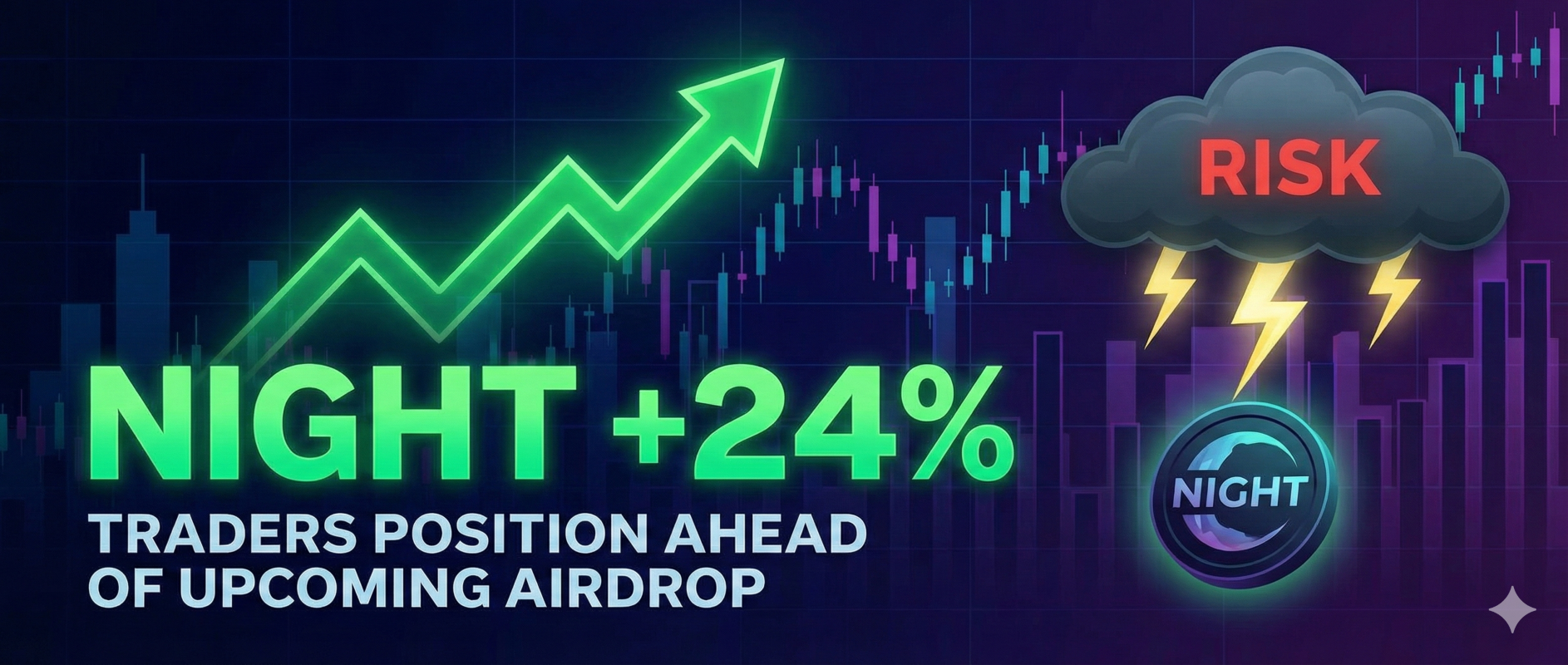
NIGHT jumps 24% as traders position ahead of upcoming airdrop, risks still loom
NIGHT staged a strong bullish rebound over the past 24 hours after spending nearly four weeks under sustained selling pressure.
The privacy-focused token surged 24%, placing it among the market’s top gainers for the day. Trading activity also spiked sharply, with total volume reaching $5.03 billion—an increase that signals firm bullish dominance during the rally.
Notably, NIGHT’s performance diverged from the broader privacy token sector. Data from Artemis shows that the weighted average performance of privacy assets declined by 0.5% over the same period, reflecting weak sentiment across the segment.
Midnight’s [NIGHT] outperformance appears to be driven by renewed ecosystem developments and, more critically, its upcoming token distribution. While these catalysts have injected fresh momentum into the market, questions remain around the sustainability of the move.
Momentum under pressure
Much of NIGHT’s recent upside can be traced to its airdrop announcement, which drew strong interest from investors globally, including high-capital participants based in the United States.
The airdrop is set to distribute approximately 4.5 billion NIGHT tokens to eligible users and officially began on December 10. Since the announcement, market participants across multiple regions have positioned for further upside.
Exchange data highlights the scale of the activity. Over the past 24 hours, Bybit recorded $3.33 billion in trading volume, while Binance accounted for $1.16 billion. Combined, the two platforms represented 67.19% and 23.5% of total market volume, respectively.
Meanwhile, the volume-to-market capitalization ratio has surged to 372%, underscoring the unusually intense trading activity fueling the recent price move.
Historically, price rallies accompanied by elevated volume often indicate strong short-term momentum. If current conditions persist, NIGHT could see further upside in the near term—though elevated volatility remains a key risk factor.
Midnight Price Prediction: Hoskinson Says It’s Cardano’s Best Launch Ever – But What Comes Next for NIGHT?
AI-Powered DeFi Project Almanak Faces Rocky Start
Almanak, one of the year’s most heavily promoted “AI quant” DeFi projects, got off to a rough start on launch day.
During today’s $ALMANAK airdrop claim window, the team reported a combination of operational missteps and a DDoS attack targeting its infrastructure. The claim interface, scheduled to open at 12:15 UTC, did not become functional until roughly 12:35 UTC. Over the same 24-hour period, ALMANAK’s price fell by approximately 80%, trading near $0.034 as early claimants and secondary market participants reacted to the unfolding issues.
What Almanak Aims to Be
Almanak positions itself as a DeFi platform where AI agents design, test, and execute quantitative trading strategies on-chain.
According to its marketing materials, the protocol relies on AI-driven “strategists” and “optimizers” that:
Build and backtest automated DeFi strategies across multiple protocols
Manage risk and rebalance positions without human intervention
Allow retail users to access complex, quant-style strategies through a simplified interface
The project is backed by a notable roster of investors, including Delphi Labs, HashKey, BanklessVC, NEAR Foundation, RockawayX, and Shima Capital. Funding trackers indicate that Almanak raised several million dollars across multiple rounds.
In the months leading up to its token generation event (TGE) and airdrop, Almanak was heavily promoted across X, Telegram, exchange blogs, and airdrop aggregators, often framed as a flagship example of how AI agents could transform DeFi.
What Went Wrong During the Airdrop
Based on Almanak’s own updates and third-party reporting, the sequence of events appears to be as follows:
Delayed launch: The claim interface was scheduled for 12:15 UTC but only became usable around 12:35 UTC.
DDoS and infrastructure issues: The team reported a DDoS attack affecting backend systems responsible for wallet creation and claim processing, compounded by internal deployment errors.
Stuck wallets: Around 1,100 users saw their newly created Almanak wallets stuck in a “PENDING” state, preventing them from completing the claim process.
Team response: Almanak stated that infrastructure has since stabilized, no tokens were lost, and the problems were limited to off-chain systems rather than smart contract vulnerabilities.
Despite these issues, trading proceeded. As claims and early exchange activity unfolded under strained conditions, ALMANAK’s price declined sharply, closing the day roughly 80% below its early trading levels.
Retail Experience: From Anticipation to Frustration
For many retail participants, the contrast was stark.
Months of marketing emphasized seamless AI-driven strategies, gamified points, and a polished user experience. The pre-launch campaign, amplified by platforms such as Bitget, MEXC, and airdrop-focused sites, positioned launch day as a major event.
Instead, users encountered a delayed frontend and a claim process that left over a thousand wallets in limbo. For airdrop participants, the experience was largely one of frustration: qualifying tasks were completed, users arrived on time, and then watched the claim flow stall as the token’s price moved sharply lower.
The gap between the project’s “quant AI precision” narrative and the reality of launch-day infrastructure problems is likely to linger in users’ memories.
Tokenomics, Expectations, and the 80% Decline
ALMANAK’s steep drawdown in its first 24 hours raises questions that extend beyond a single DDoS incident.
Several factors likely contributed:
Pre-launch expectations: Months of points farming, pre-market speculation, and influencer coverage may have pulled demand forward, leaving limited incremental buying pressure at listing.
Listing dynamics: Early access via centralized exchanges and pre-market venues allowed traders to speculate on price before the broader airdrop claim opened.
Airdrop supply overhang: Once claims became possible, many recipients sold into available liquidity, accelerating downside pressure.
Narrative shock: Infrastructure issues at launch likely reduced confidence among new entrants, discouraging holding through volatility.
Taken together, the price action resembles a familiar pattern where expectations exceed what day-one liquidity and demand can support.
How This Fits Into a Broader Pattern
Almanak’s launch joins a growing list of high-profile airdrops and TGEs that struggled on day one.
Past cycles have seen:
Congested or failing claim portals for major airdrops
Disputes over eligibility criteria and last-minute rule changes
Sharp price declines as large portions of supply unlock simultaneously
What distinguishes Almanak’s case is that the failure stemmed primarily from off-chain infrastructure rather than smart contract flaws. A relatively small but visible group of users absorbed most of the friction, making the incident feel particularly personal to those affected.
It serves as another reminder that, even in crypto-native projects, Web2 infrastructure can be a critical point of failure.
Does This Undermine the Almanak Thesis?
Whether this episode becomes a minor setback or a defining moment depends on what follows.
Reasons the project could recover:
No on-chain exploits occurred, and the team reports that no tokens were lost.
Almanak retains backing from well-known investors.
Sustained product performance could eventually outweigh early launch issues.
Reasons the damage could linger:
Retail users who felt disadvantaged on day one may be slow to re-engage.
An 80% drawdown crystallizes losses for early buyers and leveraged traders.
The promise that AI improves efficiency is harder to sell after a visibly chaotic launch.
While the launch does not invalidate the broader idea of AI-driven DeFi, it has reinforced skepticism and highlighted the gap between branding and operational execution.
Conclusion
Almanak’s airdrop was intended to showcase data-driven, AI-assisted DeFi. Instead, it exposed how fragile heavily marketed launches can be when off-chain infrastructure falters and expectations run high.
A delayed claim portal, roughly 1,100 stuck wallets, and an 80% price decline in 24 hours were enough to turn launch day into a damage-control exercise—even without any loss of funds at the protocol level.
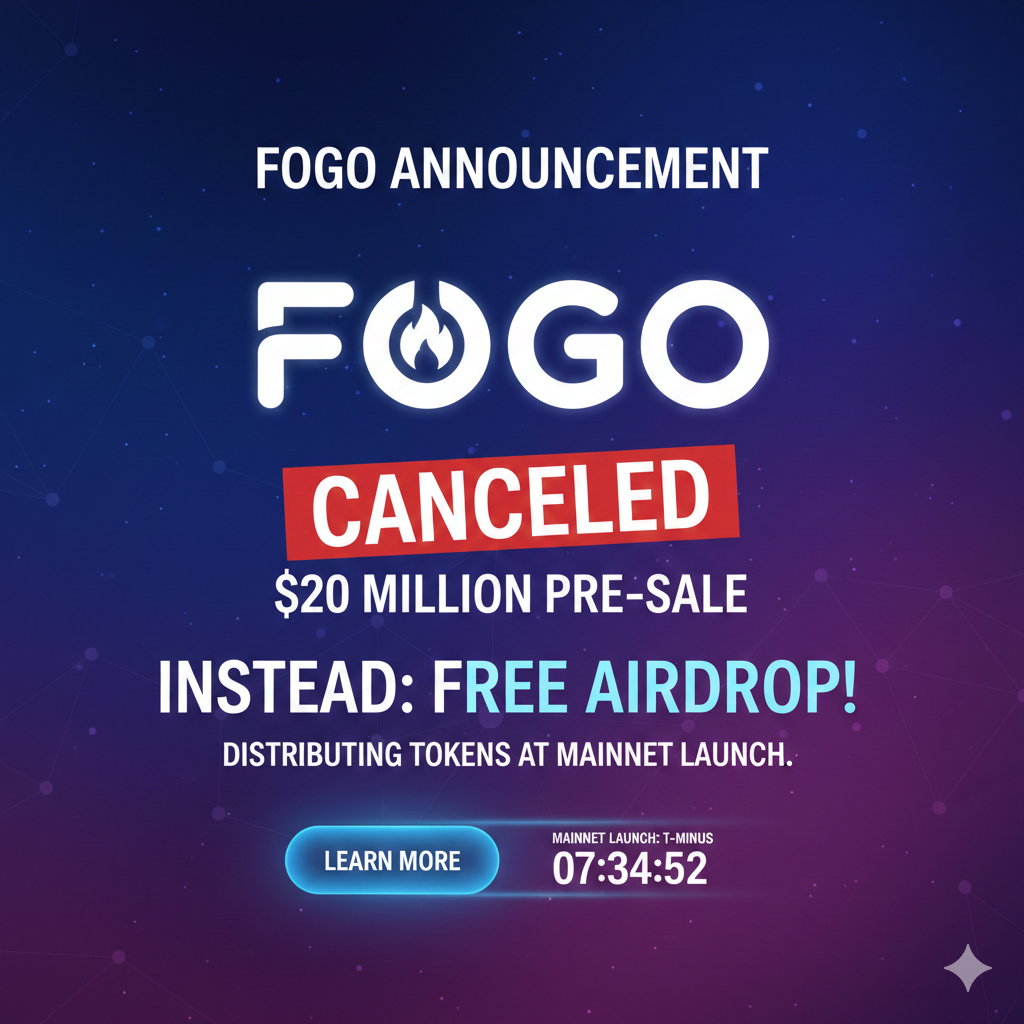
Fogo has canceled its $20 million pre-sale and will instead distribute tokens via an airdrop during its upcoming mainnet launch.
Fogo, an experimental Layer 1 blockchain built on the Solana Virtual Machine (SVM), has canceled a previously announced token pre-sale ahead of its January mainnet launch, opting instead to distribute the tokens via an airdrop.
Earlier this week, the project revealed plans for a $20 million token pre-sale valuing the network at a $1 billion fully diluted valuation. The sale was set to offer 2% of FOGO’s total supply and was framed as a way to broaden token distribution rather than raise significant capital.
However, Fogo has since reversed course. “The original goal of the presale was broad distribution to current users and loyalists, but we determined there are better ways to do that while we focus on the launch of public mainnet,” Fogo Foundation Director Robert Sagurton told The Block in a direct message.
Instead of selling the tokens, Fogo will now airdrop the entire 2% allocation, a project representative confirmed. “Always read the room, sanity check original assumptions, and don’t hesitate to pivot when something no longer makes sense,” Sagurton added.
Tokenomics adjustments
The pre-sale cancellation marks the latest change to Fogo’s tokenomics. On Thursday, the team published its allocation plan, which includes 6.6% of the total supply reserved for an immediately tradable airdrop. Roughly one-third of the initial supply will be unlocked to fund the Fogo Foundation, while 34% is allocated to core contributors under a four-year vesting schedule. Under the initial plan, 38.98% of tokens will be unlocked at network launch.
Fogo also disclosed two institutional investors—Distributed Global and CMS Holdings—which together will receive 8.77% of the total supply. Advisors are allocated an additional 7%.
Beyond the airdrop, 11.25% of FOGO is reserved for “community ownership,” including participants in two crowdfunding rounds conducted via Echo, the angel investment platform founded by crypto trader Jordan Fish (Cobie), as well as a now-canceled Metaplex sale. According to the team, more than 3,200 investors participated in the Echo rounds, including an $8 million raise at a $100 million valuation in January.
“The Echo and upcoming Metaplex sales ensure community members hold a greater share than institutional investors,” the team wrote on X. Ahead of the now-canceled pre-sale, Fogo also burned an additional 2% of the genesis supply originally allocated to core contributors. “It’s gone forever,” a project representative said.
Airdrop, points, and mainnet launch
With the Dec. 17 pre-sale scrapped, Fogo indicated that participants in its points program could receive a larger token allocation. The team said it has taken snapshots of Fogo Fishers, Portal Bridge points holders, and all USDC transfers made since the initial pre-sale announcement.
These early users—testnet participants, Fogo Fishing dApp users, and those who bridged USDC via the Wormhole-powered Portal Bridge—will receive Fogo Flames, a points system redeemable for FOGO tokens following the Jan. 13 mainnet launch.
“We value the strong, positive support received. Rest assured, we have taken note,” the team wrote. “The Fogo Flames points program remains a central pillar to give meaningful distribution to developers, community members, and ecosystem participants.”
Sagurton, a former Jump Crypto executive, described the decision as a “doubling down on Flames,” emphasizing that the strategy shift will not affect the Layer 1’s planned launch.
Fogo is positioning itself as a next-generation blockchain built on Solana’s underlying technology. Developed by former Wall Street executives, the network aims to achieve 40-millisecond block times, support real-time trade execution, and mitigate malicious MEV. Its testnet, launched in July, currently processes more than 1,000 transactions per second.
Notably, Fogo plans to become the first blockchain to implement Jump Crypto’s newly released validator client software.

Sony’s Soneium L2 Quietly Launches Its First Community Airdrop Claims
Claims have officially opened for Sony’s first major community airdrop on its Soneium Layer 2 network. The news surfaced quietly through the project’s official X account, which noted that “Soneium Community Airdrop Claims will start soon” and confirmed eligibility for farmers, swappers, liquidity providers, and even users who “just touched Kyo.”
A follow-up graphic from the same channel provided concrete details:
the claim window runs from 10 December 2025 at 09:00 UTC to 9 January 2026 at 09:00 UTC. Claims will take place directly on the Soneium chain, with Kyo Finance highlighted as the primary DeFi venue for interaction.
As of now, this community claim phase has only been referenced in social posts and scattered documentation. With no standalone, in-depth announcement published yet, the opening of the claim window remains an early opportunity for broader coverage.

Binance Alpha Converts Loyalty Points Into Access for the LAVA Airdrop
Binance Alpha has quietly evolved its loyalty program into a de-facto on-chain launchpad. The latest project to join the lineup is Lava Network (LAVA), introduced through a points-gated airdrop designed to reward users who have accumulated sufficient Alpha Points within the ecosystem.
According to an announcement from the official Binance Wallet account on X, Lava Network is now live on Binance Alpha. Users holding at least 230 Alpha Points are eligible to claim 165 LAVA directly from the Alpha page. Brief updates on Binance Square—from outlets including BlockBeats and Odaily—echo the news, highlighting that LAVA has already begun trading with a market valuation in the tens of millions.
Binance Partnership Accelerates Adoption of Rational Privacy With NIGHT Token Support
Binance has officially listed the NIGHT token, expanding its reach and enhancing the utility of the Midnight network. The listing opens the door for a broader global audience, giving more traders and developers the ability to access and build on Midnight’s privacy-focused ecosystem.
Midnight noted that Binance’s support will play a key role in accelerating NIGHT’s adoption, stating:
“As the largest global exchange, Binance is helping bring NIGHT to a wider audience, allowing more users to begin engaging directly with the Midnight network.”
According to Binance Wallet, trading for NIGHT will go live on Binance Alpha starting December 9. In addition, an airdrop campaign is planned, allowing eligible users to redeem NIGHT using Alpha Points once trading becomes available.
Stable launches STABLE token airdrop via Merkl and Stargate Finance
Stable — a blockchain platform backed by Bitfinex and PayPal Ventures — officially launched its STABLE token airdrop today via Merkl and Stargate Finance.
Alongside the airdrop, the project unveiled StableChain, a USDT-native layer-1 blockchain built to optimize high-volume, predictable stablecoin settlement. StableChain is designed to transform global value transfer by solving inefficiencies in current systems and establishing an ecosystem focused specifically on stablecoin transactions.
The launch is reinforced by a strong network of partners — including USDT0, Curve Finance, Allium, PayPal, Transak, and WalletConnect — all working to build a scalable, compliant, and trustworthy stablecoin infrastructure.